


Targeting Chronic Anemia in Thalassemia: The Emerging Role of Mitapivat as a Disease-Modifying Therapy
Kevin H.M. Kuo, MD, MSc, FRCPC
Associate Professor
Division of Hematology, Department of Medicine, Faculty of Medicine, University of Toronto
Institute of Health Policy, Management and Evaluation, Dalla Lana School of Public Health, University of Toronto
This article is part of the GARDEN Experts Insights series, featuring key perspectives from leading international experts who contribute to GARDEN educational initiatives and webinars.
In this edition, Prof. Kevin Kuo explores the emerging role of mitapivat in the treatment of thalassemia, discussing its potential as a disease-modifying therapy for chronic anemia. Drawing on the latest clinical evidence, he examines how pyruvate kinase activation may represent a novel therapeutic strategy to improve hemoglobin levels, reduce transfusion burden, and address unmet needs in both transfusion-dependent and non-transfusion-dependent patients.
Introduction
Thalassemia is one of the most prevalent inherited hemoglobinopathies in the world and is a significant public health problem in many parts of the world, especially the Mediterranean and Middle East, South Asia and Southeast Asia. The disorder is caused by the inability to make α- or β-globin chains, which causes improper erythropoiesis, chronic hemolytic anemia, and a variety of clinical features from mild anemia to transfusion dependency. Although there have been significant improvements in supportive care, thalassemia remains a condition with a significant morbidity and mortality burden, mainly related to chronic anemia, iron overload, and progressive organ damage (Taher et al., 2025) (Taher et al., 2011).
Thalassemia management has been traditionally based on treating the effects of the disease, not its underlying pathophysiology. Blood transfusion is the mainstay of treatment in many patients, especially transfusion dependent thalassemia (TDT) and iron chelation therapy is a critical component in the prevention of transfusion related iron overload. While these interventions have made a huge difference in survival over the last few decades, they do not directly address the underlying biological abnormality of ineffective erythropoiesis, which is responsible for many of the complications of the disease (Taher et al., 2021).
Increasing evidence has shown that chronic anemia is a significant factor in poor clinical outcome. Patients with chronic low hemoglobin have increased cardiovascular complications, pulmonary hypertension, endocrine dysfunction, osteoporosis, thrombosis and poor quality of life. Importantly these complications do not occur only in patients who have to have regular transfusions. The non-transfusion-dependent thalassemia (NTDT) disease phenotype, which is considered to be milder, can still lead to great disease burden over time, as a result of chronic anemia and ineffective erythropoiesis.
These problems have encouraged the search for disease-modifying drugs that act on the underlying cause of thalassemia, rather than its complications. A novel oral pyruvate kinase activator, mitapivat, is one of the most promising developments in this area, as it is a first in class compound that could improve red blood cell metabolism and erythropoiesis. Mitapivat is designed to increase adenosine triphosphate (ATP) production in red blood cells, thereby enhancing cell function, minimizing ineffective erythropoiesis, and ultimately boosting hemoglobin levels (Makis et al., 2021).
Professor Ali Taher, a world-renowned hematologist and expert in thalassemia and hemoglobinopathies, discussed the changing landscape of disease burden in thalassemia and the growing evidence of mitapivat as a novel therapeutic approach in a recent webinar on advanced therapies in rare red-cell disorders. Inspired by data from Phase 2 studies and the pivotal ENERGIZE and ENERGIZE-T clinical trials, the presentation discussed the potential of mitapivat to meet important unmet needs in both NTDT and TDT populations.
Understanding Thalassemia: Why Non-Transfusion-Dependent Disease Is Not Necessarily Mild
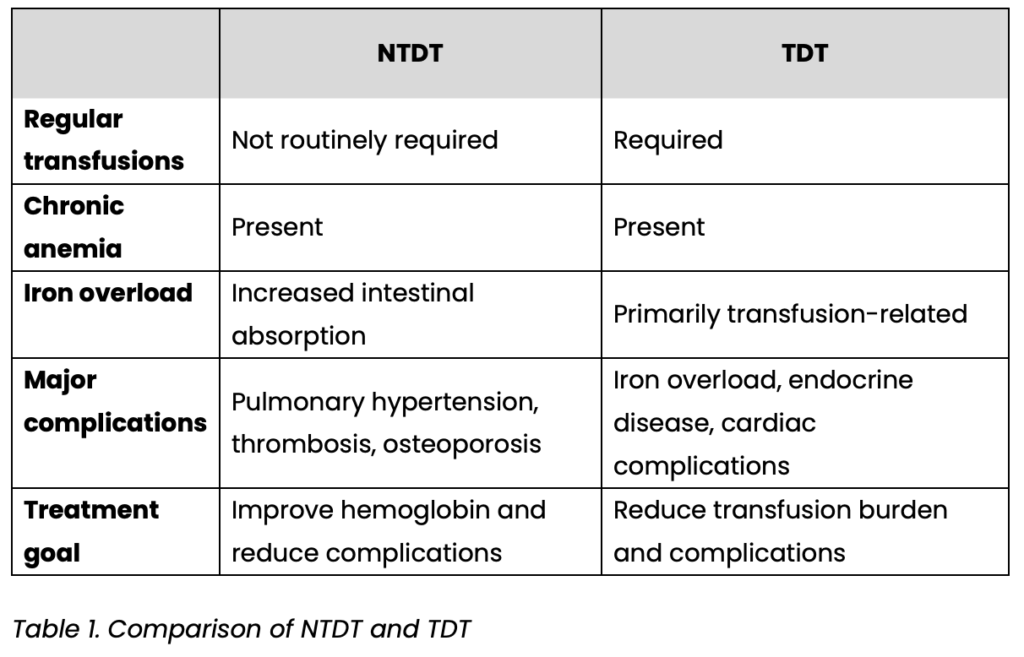
Traditional classification of thalassemia is based on the need for transfusion into two major clinical groups: transfusion-dependent thalassemia (TDT) and non-transfusion-dependent thalassemia (NTDT). This classification is helpful for the clinical management of the disease, but can lead to the false impression that NTDT is a relatively mild disease. In the past, the clinical focus has been mainly on patients with severe anemia who need chronic blood transfusion therapy, and the complications of chronic transfusion therapy have been well recognized. The morbidity associated with NTDT, however, has been increasingly shown to be significant and ongoing, and is a significant burden throughout a patient’s life (Musallam et al., 2013).
Persons with NTDT may be able to survive without frequent transfusion. However, the pathophysiological abnormalities that underlie these ineffective erythropoiesis, chronic hemolysis and persistent anemia are still in operation. This means that, for many patients, organ damage continues even when they receive fewer transfusions (Sleiman et al., 2018).
In long-term follow-up studies, patients with NTDT have been found to be more susceptible to other complications, such as pulmonary hypertension, thromboembolic events, osteoporosis, endocrine disorders, extramedullary hematopoiesis, leg ulcers and chronic liver disease. Most significantly, these complications tend to develop slowly and become more common as people get older. There are several studies that have shown that the disease burden increases considerably after adolescence, suggesting that the cumulative effects of chronic anemia and ineffective erythropoiesis over time lead to progressive disease burden.
Clinical research has shown that there is a definite connection between hemoglobin concentration and patient outcomes. Hemoglobin is a marker of morbidity, diminished quality of life, decreased exercise capacity, and increased risk of long-term complications. Results of the webinar indicated that maintaining hemoglobin levels around or above 10 g/dL may have clinical benefits and reduced complication rates. While patient-specific factors should always be taken into account, these results further support the notion that anemia improvement may offer benefits beyond symptom alleviation (Musallam et al., 2024).
Thalassemia is not just a physical disease. Chronic fatigue, lower productivity, diminished educational performance and social problems have a significant impact on the quality of life. Patients often complain of restrictions in social life, work and general quality of life. These are the quality of life effects that are sometimes overlooked in the management of the patient with the emphasis on laboratory data and transfusion needs. As a result, patient-centered outcomes are becoming more and more important in modern therapeutic strategies, alongside traditional clinical endpoints.
The changing nature of NTDT has revealed the importance of rethinking the severity of the disease and the need for more holistic care for patients. Chronic anemia is now recognized as a major cause of morbidity and clinicians are beginning to pay more attention to therapies aimed at the underlying mechanisms of disease. This paradigm shift is the clinical basis for developing new therapies, like mitapivat, that work to enhance the function of red blood cells and to affect disease process, not just its symptoms.
Chronic Anemia and Iron Overload: The Hidden Drivers of Morbidity
Chronic anemia leads to chronic tissue hypoxia, elevated cardiac work load and compensatory bone marrow expansion. As time goes on, these adaptations can cause severe complications such as pulmonary hypertension, heart failure, osteoporosis, and extramedullary hematopoiesis. Importantly, several studies have shown that low Hb levels are linked to increased complications and worse clinical outcomes. The evidence presented in the webinar indicated that for patients with higher Hb levels, there were fewer disease-related complications and better quality of life (Machado & Farber, 2013).
Iron overload is another challenge and one that is often overlooked. Non-transfusion dependent thalassemia patients may also suffer from high levels of iron accumulation, although they receive few or no blood transfusions. This is because inadequate erythropoiesis decreases hepcidin production which increases iron absorption from the intestine. As a result, excess iron gradually accumulates in vital organs.
Clinical effects of iron overload are wide ranging, such as liver fibrosis, cirrhosis, endocrine dysfunction, osteoporosis, renal impairment and cardiovascular disease. Importantly, chronic anemia and iron overload have been shown to independently be associated with increased risk of mortality. The results underscore the importance of therapeutic approaches that target the underlying mechanisms of the disease, rather than just treating complications. This increasing awareness has led to a surge in the interest in disease-modifying drugs like mitapivat that work to improve the function of the red blood cells and to decrease the biological causes of disease progression.
Mitapivat: A Novel Disease-Modifying Approach
Although there has been tremendous progress in supportive care, there are still great challenges in the management of thalassemia. The use of regular blood transfusion and iron chelation therapy has been beneficial in increasing the survival rate and decreasing many complications, but it does not directly target the underlying mechanisms of ineffective erythropoiesis and chronic anemia. As a result, many patients still suffer from disease-related complications, treatment burden and reduced quality of life even when managed with best available conventional treatments.
This unmet need has led to the creation of therapies aimed at the biological processes of thalassemia. Mitapivat is one of the most promising emerging treatments, an oral pyruvate kinase (PK) activator that is a first-in-class drug that may enhance red blood cell metabolism and function (Kuo et al., 2025).
Pyruvate kinase is an important enzyme in the glycolytic pathway and is essential for the production of adenosine triphosphate (ATP), which is the major source of metabolic energy for the red blood cells. Glycolysis is the only way that mature red blood cells can obtain energy, since they have no mitochondria. Impaired cellular function and shortened red cell survival in thalassemia are due to ineffective erythropoiesis and chronic red cell stress. These abnormalities are likely to be worsened by decreased energy availability (M. J. M. Traets et al., 2025).
Mitapivat functions by stimulating the enzyme pyruvate kinase, which helps to produce more ATP in red blood cells. Improved cellular energy leads to better membrane stability, better red cell survival and may help to decrease the ineffective erythropoiesis of thalassemia. Mitapivat works on a fundamental metabolic pathway, which is different from the traditional pathway of treating the effects of anemia.
One of the strengths of mitapivat is that it could be applicable to various thalassemia populations. Mitapivat has shown activity in transfusion-dependent, as well as non-transfusion-dependent, disease, whereas treatments developed specifically for either type of disease have not shown activity in the other. This wide range of therapeutic applications has raised a lot of interest in the hematology field and several clinical trials have been developed to assess its efficacy and safety. The findings from these studies represent the best evidence to date on the disease modifying effect of activating PK.
Clinical Evidence: Phase 2 Studies and Early Proof of Concept
The clinical development of mitapivat in thalassemia started with Phase 2 trials aimed at assessing the efficacy of mitapivat for improving hemoglobin levels and the underlying pathophysiological abnormalities of ineffective erythropoiesis. These initial studies were significant as they were the first to show that targeting the metabolism of red blood cells could lead to real clinical improvements in patients with thalassemia (Musallam et al., 2022).
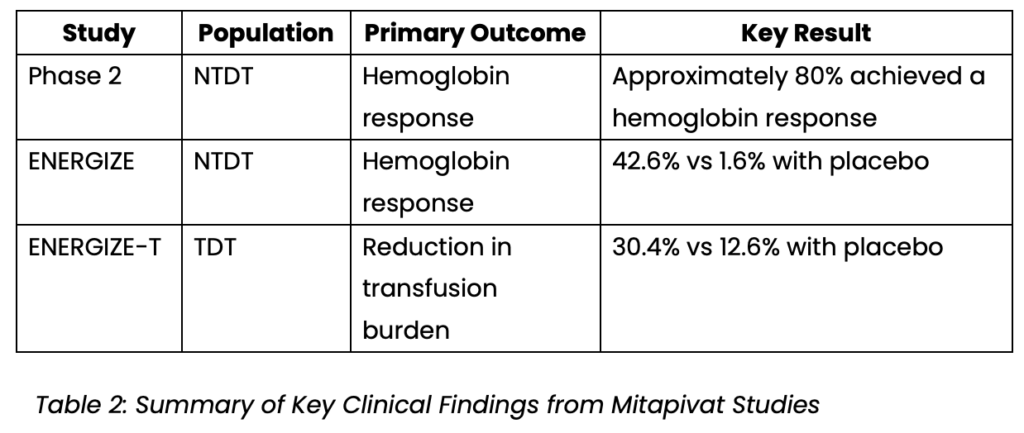
Mitapivat has shown promising efficacy in various clinically meaningful endpoints in the Phase 2 trial in adult patients with non-transfusion-dependent thalassemia. The trial demonstrated that a significant percentage of patients had a clinically relevant hemoglobin response, and that about 80% of the patients had an increase in hemoglobin. This was especially important as chronic anemia is known to be one of the main causes of morbidity in thalassemia (Kuo et al., 2025).
In addition to increases in hemoglobin, investigators noted improvements in other markers of ineffective erythropoiesis and hemolysis. Improvements in markers of red blood cell destruction were associated with an increase in the survival of red blood cells, while improvements in erythropoietic parameters were associated with a potential effect on the underlying disease process rather than just on the symptoms. These results confirmed the hypothesis that activation of pyruvate kinase would have a beneficial effect on the physiology of the red blood cell and the disease biology.
The safety profile seen in Phase 2 development was also promising. Headache, dizziness, and insomnia were the most common adverse events, and they were mild to moderate. Importantly, during these initial studies, no significant unanticipated safety issues arose, giving confidence for continued clinical development.
Taken together, these results were an important proof of concept for mitapivat in thalassemia. The results indicated that the increased Hb, good biomarker responses, and tolerability suggested that improving red blood cell energy metabolism could be a potential therapeutic approach. The encouraging results then led to larger, Phase 3 studies, such as the landmark ENERGIZE and ENERGIZE-T trials, which aimed to demonstrate efficacy and safety in a wider patient population and to position mitapivat for use in routine clinical practice.
ENERGIZE Trial: Expanding Treatment Possibilities in Non-Transfusion-Dependent Thalassemia
Mitapivat has taken a major leap forward in the clinical development of its non-transfusion-dependent thalassemia (NTDT) drug pipeline with the Phase 3 ENERGIZE trial. Based on the promising results of previous studies conducted in phase 2, the objective of ENERGIZE was to see if the benefits of increasing hemoglobin and markers of ineffective erythropoiesis could be repeated in a larger, randomized, placebo-controlled study. This trial was conducted to meet a major unmet clinical need (Moir, 2023), because chronic anemia is a major issue in NTDT and disease-modifying treatments are rare.
One of the main goals of the ENERGIZE study was to determine if mitapivat resulted in a clinically significant improvement in hemoglobin levels. This endpoint was especially important as chronic anemia is now known to be a significant cause of disease-related complications, reduced quality of life, and chronic morbidity. The trial was not only designed to treat symptoms, but also to determine whether or not the disease process could be enhanced by targeting the metabolism of red blood cells.
The outcome was a definite therapeutic advantage. The study achieved its primary endpoint, as more patients taking mitapivat had a hemoglobin response than did the placebo group. About 42.6% of those who received mitapivat had the targeted hemoglobin response, versus 1.6% of the patients who received a placebo (Mistry, 2025). The results were very suggestive of the potential of activating PK to be a successful treatment for NTDT patients.
Perhaps most importantly, the effects of mitapivat were not just on hemoglobin concentration. The trial also showed that there were benefits with respect to several biological parameters related to inadequate erythropoiesis and hemolysis. The indirect bilirubin, lactate dehydrogenase (LDH) and the reticulocyte related parameters were increased, reflecting increased RBC survival and decreased cellular destruction.
These observations support the idea that mitapivat can be a disease-modifying agent, not only by normalizing laboratory parameters but also by correcting the basic metabolic abnormalities. These observations support the notion that the effects of mitapivat are not only to normalize laboratory parameters but also to normalize the underlying metabolic abnormalities. (Beers et al., 2024)
Another aspect of the trial that was important was the clinical relevance of the ENERGIZE trial. Apart from the advantages of better hemoglobin, there could be other implications of lessening the anemia symptoms. Improvements in hemoglobin levels could have lasting effects, potentially leading to improved outcomes and quality of life due to chronic anemia’s link to other conditions like pulmonary hypertension, bone disease, cardiovascular stress, and decreased physical function. However, with longer follow-up required to confirm, these results support the idea of intervening earlier in patients with NTDT.
In summary, the ENERGIZE trial demonstrated that mitapivat is one of the most promising new therapies for non-transfusion-dependent thalassemia. The study demonstrated significant hemoglobin improvement and disease related biomarkers, and offers a rationale to shift away from supportive management to disease modification, as well as a growing focus on chronic anemia as a therapeutic target for thalassemia management.
ENERGIZE-T Trial: Reducing Transfusion Burden in Transfusion-Dependent Thalassemia
The ENERGIZE trial was conducted in patients with non-transfusion-dependent thalassemia (NTDT) while the ENERGIZE-T study expanded the study of mitapivat to patients with transfusion-dependent thalassemia (TDT) (Algeri & Locatelli, 2025). This patient group is a particularly difficult to manage patient population, since frequent blood transfusion is still necessary for survival and symptom control. Transfusions are effective at raising hemoglobin levels, but they also have many long-term side effects, most importantly iron overload, which can cause the liver, heart, endocrine glands and other organs to suffer from progressive damage. This has led to the goal of reducing transfusion needs being a key therapeutic goal in modern thalassemia care.
The primary goal of the ENERGIZE-T trial was to assess the ability of mitapivat to reduce transfusion rates due to increased endogenous red blood cell production and to reduce ineffective erythropoiesis. Mitapivat is unique, compared to traditional supportive therapies that focus on the effects of anemia, because it acts on a key metabolic pathway in red blood cells. The therapy will increase the activity of pyruvate kinase and increase the production of ATP, which should help the red cells function better and last longer, possibly decreasing the need for frequent blood transfusions.
The webinar presentations showed that the trial was able to meet its primary objective. More patients taking mitapivat had a clinically significant decrease in transfusion burden than patients taking placebo. Around 30.4% of those treated with mitapivat met the pre-specified transfusion reduction endpoint, while 12.6% of the placebo group did. These results offer strong evidence that mitapivat may decrease transfusion needs in a subset of patients with TDT (Hodroj et al., 2025).
These results have significant clinical implications. Minimizing iron transfusion dependence can help limit the total exposure to iron, which can lower the risk of iron-related complications and lessen the strength of iron chelation therapy needed for a patient’s lifetime. In addition, the reduced transfusion burden can improve convenience and overall quality of life for patients, and may reduce the burden of treatment, especially for those who are now spending a lot of time in hospital for their treatment.
Importantly, the results of the ENERGIZE-T study support the overall idea of disease modification in thalassemia. Mitapivat is not a transfusion of missing red blood cells, but instead works to enhance the body’s production and maintenance of functional erythrocytes. This is a major change in therapeutic approach and reflects a trend towards targeted therapy based on underlying disease biology.
While not all patients were able to reduce transfusion requirements, there is clear evidence from the trial that activation of pyruvate kinase can have clinically significant impact in transfusion dependent disease. The results of this ENERGIZE-T study, combined with the results of ENERGIZE, confirm that mitapivat has therapeutic potential in all disease stages of thalassemia, making it a promising new treatment option in the continually changing treatment landscape.
Safety, Clinical Implications, Future Perspectives, and Conclusion
The usefulness of any new treatment will rely on its effectiveness as well as its safety and usefulness in everyday clinical practice. In the clinical development program, mitapivat has shown an overall favourable and tolerable safety profile. Adverse events reported most frequently were headache, insomnia, dizziness, nausea, and upper respiratory tract infections. Importantly, most adverse events were mild or moderate in severity and there were no major unexpected safety signals during Phase 2 studies or during the pivotal ENERGIZE and ENERGIZE-T trials. The results are very promising, especially for thalassemia, which is a chronic disease that requires lifelong treatment and adherence to therapy (Conrey et al., 2025).
The clinical relevance of mitapivat could be even greater than its safety. The management of thalassemia has been largely directed towards reducing the complications that can occur, such as transfusion, iron chelating and supportive care, for decades. These treatments have changed what happens to patients when they die, but they have not changed the processes of disease progression. Mitapivat is a completely different approach to therapy. It aims to inhibit red blood cell metabolism and enhance the production of energy within the cells, potentially alleviating one of the mechanisms involved in ineffective erythropoiesis and chronic anemia (Kuo et al., 2025).
Based on the findings of the ENERGIZE and ENERGIZE-T studies, mitapivat could be a useful treatment option for both non-transfusion-dependent and transfusion-dependent patients. In NTDT, hemoglobin improvements can help to minimize the impact of chronic anemia, which could result in a decreased risk of chronic complications and better quality of life. Reducing the transfusion burden in TDT may lead to a reduction in cumulative iron exposure, fewer health care visits and less physical and psychological burden from lifelong transfusion therapy. These benefits go beyond laboratory values and can have a significant effect on the quality of life and long-term health outcomes.
While these encouraging results are promising, there are a number of questions that still need to be addressed. Further studies will be needed to assess whether better Hb levels and transfusion requirements result in lower morbidity and mortality in the long-term. Further studies are also required to determine the most responsive patients, the long-term efficacy, and the combination of mitapivat with other new therapies. The therapeutic paradigm of thalassemia is constantly evolving, and future studies will further elucidate the best place for thalassemia in treatment algorithms.
Finally, the webinar led by Professor Ali Taher underscored a paradigm shift in the treatment of thalassemia from treating the effects of disease to curing the disease itself. The data from Phase 2 trials and from the pivotal ENERGIZE and ENERGIZE-T trials shows that mitapivat can have a positive effect on hemoglobin, lower transfusion needs, and positively impact disease related biomarkers. The data available so far make mitapivat a promising long-term disease-modifying therapy for thalassemia, though further research is needed to clarify its long-term effects. As knowledge of disease mechanisms grows, treatments like mitapivat can become more important in providing more effective, personalized, and patient-centered care for those affected by thalassemia.
References
Algeri, M., & Locatelli, F. (2025). The ENERGIZE trial: Is mitapivat ready to take center stage in NTDT management? Med (New York, N.Y.), 6(9), 100844. https://doi.org/10.1016/j.medj.2025.100844
Beers, van, Hanny Al-Samkari, Grace, R. F., Barcellini, W., Glenthøj, A., DiBacco, M., Wind-Rotolo, M., Xu, R., Beynon, V., Patel, P., Porter, J. B., & Kevin H.M. Kuo. (2024). Mitapivat improves ineffective erythropoiesis and iron overload in adult patients with pyruvate kinase deficiency. Blood Advances. https://doi.org/10.1182/bloodadvances.2023011743
Conrey, A., Asomaning, N., Frey, I., Pierre Charles, R., Lovins, D., Xu, J. Z., Mendez-Marti, S., Le, K., Kruah, B., Li, Q., Dunkelberger, E., Cellmer, T., Yates, A., Wind-Rotolo, M., Huston, C., Jeffries, N., Eaton, W. A., & Thein, S. L. (2025). Long-term mitapivat treatment is safe and efficacious in patients with sickle cell disease. Blood Red Cells & Iron, 1(2), 100014. https://doi.org/10.1016/j.brci.2025.100014
Hodroj, M. H., Klim, J., Charbel, N., & Taher, A. (2025). Mitapivat: a step forward across different hemolytic diseases. Expert Opinion on Emerging Drugs, 1–3. https://doi.org/10.1080/14728214.2025.2458063
Kuo, K. H. M., Layton, D. M., Lal, A., Vichinsky, E. P., Dahlin, J. L., Shen, S., Price, G. M., Gilroy, K. S., Estepp, J. H., & Al‐Samkari, H. (2025). Long‐term efficacy and safety of mitapivat in non‐transfusion‐dependent α‐ or β‐thalassaemia: An open‐label phase 2 study. British Journal of Haematology, 206(6), 1764–1773. https://doi.org/10.1111/bjh.20058
M. J. M. Traets, Bos, J. F., van, Pelt, L. van, Dijk, van, Oirschot, van, de, A., Jans, J. J., Solinge, van, S. E. M. Schols, Lauw, M. N., Cnossen, M. H., Nur, E., Biemond, B. J., Rijneveld, A. W., Beers, van, R. van Wijk, & Rab, E. (2025). Pyruvate Kinase Function Correlates With Red Blood Cell Properties and Clinical Manifestations in Sickle Cell Disease. American Journal of Hematology. https://doi.org/10.1002/ajh.27644
Machado, R. F., & Farber, H. W. (2013). Pulmonary Hypertension Associated with Chronic Hemolytic Anemia and Other Blood Disorders. Clinics in Chest Medicine, 34(4), 739–752. https://doi.org/10.1016/j.ccm.2013.08.006
Makis, A., Voskaridou, E., Papassotiriou, I., & Hatzimichael, E. (2021). Novel Therapeutic Advances in β-Thalassemia. Biology, 10(6), 546. https://doi.org/10.3390/biology10060546
Mistry, N. (2025, July 31). Mitapivat improves clinical outcomes in patients with non-transfusion dependent thalassemia. 2 Minute Medicine. https://www.2minutemedicine.com/mitapivat-improves-clinical-outcomes-in-patients-with-non-transfusion-dependent-thalassemia/
Moir, H. (2023). Expert Insights: Phase III Clinical Trials in Non-Transfusion-Dependent (ENERGIZE) and Transfusion-Dependent (ENERGIZE-T) α- and β-Thalassaemia. European Medical Journal. Hematology, 2–9. https://doi.org/10.33590/emjhematol/10308707
Musallam, K. M., Barella, S., Raffaella Origa, Battista, G., LISI, R., Pasanisi, A., Longo, F., Gianesin, B., & Gian Luca Forni. (2024). Pretransfusion hemoglobin level and mortality in adults with transfusion-dependent β-thalassemia. Blood, 143(10), 930–932. https://doi.org/10.1182/blood.2023022460
Musallam, K. M., Rivella, S., Vichinsky, E., & Rachmilewitz, E. A. (2013). Non-transfusion-dependent thalassemias. Haematologica, 98(6), 833–844. https://doi.org/10.3324/haematol.2012.066845
Musallam, K. M., Taher, A. T., & Cappellini, M. D. (2022). Right in time: Mitapivat for the treatment of anemia in α- and β-thalassemia. Cell Reports Medicine, 3(10), 100790. https://doi.org/10.1016/j.xcrm.2022.100790
Sleiman, J., Tarhini, A., Bou-Fakhredin, R., Saliba, A., Cappellini, M., & Taher, A. (2018). Non-Transfusion-Dependent Thalassemia: An Update on Complications and Management. International Journal of Molecular Sciences, 19(1), 182. https://doi.org/10.3390/ijms19010182
Taher, A. T., Farmakis, D., Porter, J. B., Cappellini, M. D., & Musallam, K. M. (2025). Guidelines for the Management of Transfusion-Dependent β-Thalassaemia (TDT). Nih.gov; Thalassaemia International Federation. https://www.ncbi.nlm.nih.gov/books/NBK614251/
Taher, A. T., Musallam, K. M., & Cappellini, M. D. (2021). β-Thalassemias. New England Journal of Medicine, 384(8), 727–743. https://doi.org/10.1056/nejmra2021838
Taher, A. T., Musallam, K. M., Cappellini, M. D., & Weatherall, D. J. (2011). Optimal management of β thalassaemia intermedia. British Journal of Haematology, 152(5), 512–523. https://doi.org/10.1111/j.1365-2141.2010.08486.x